

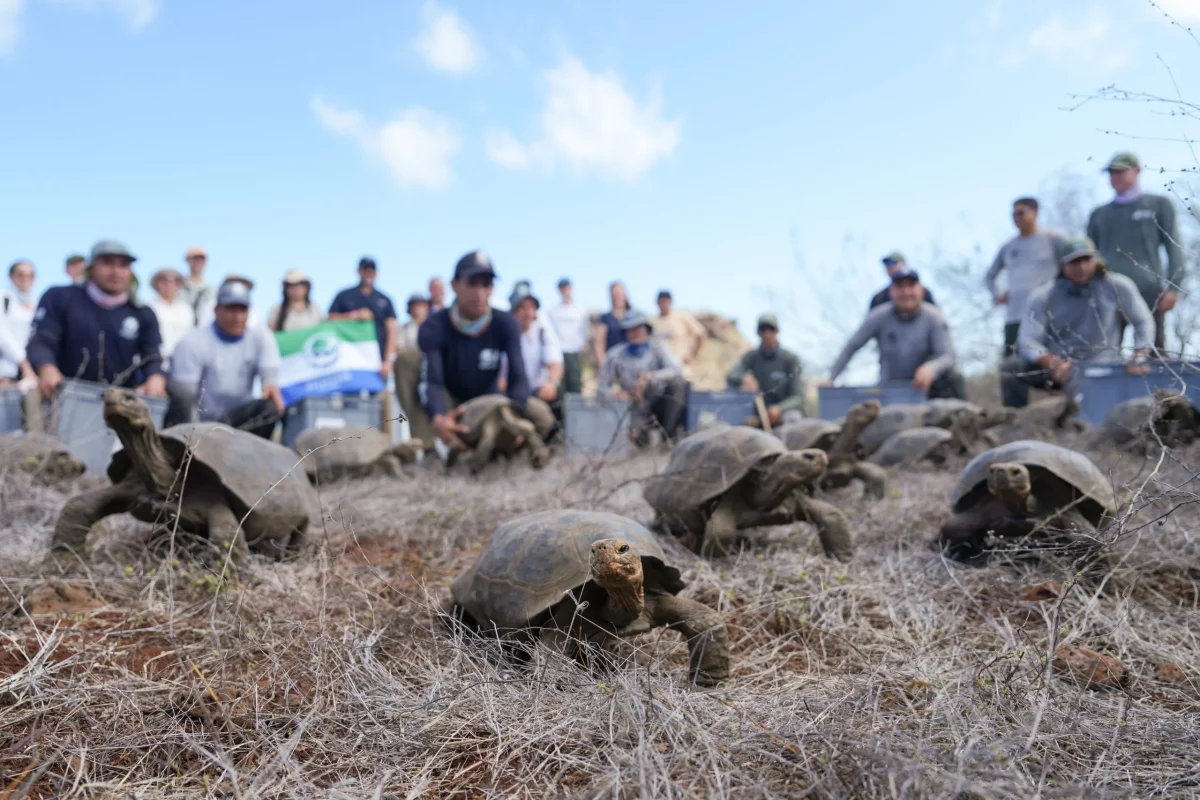
180 years ago, illegal hunting pushed giant Galápagos tortoises to extinction, and now they’re back. Conservationists released 158 juvenile tortoises onto Floreana in the Galápagos archipelago.
According to National Geographic, “Thanks to an accidental discovery, an army of rangers and researchers are now at the precipice of what may be the most ambitious island recovery ever attempted.”
This breeding project started in 2020 and produced 720 of the hybrid Floreanan tortoises. Returning tortoises to Floreana isn’t the only conservation effort that has taken place on Floreana. $15 million went to map plant recovery, land management, and human conflict in an attempt to make the island more habitable.
Researchers accidentally found tortoises with the Floreana DNA on the neighboring island, Isabela. This species from Isabela has 40% to 80% of the genetic makeup of the species from Floreana.
Biologist Washington Taiga said, “In genetic terms, reintroducing a species to that island with a significant genetic component of the original species is vital.”
One of the more surprising organizations involved in this conservation effort is NASA. They were tasked with finding the best location to release the juvenile tortoises. The goal is to give these tortoises the best chance to take root on the island so they will be there decades in the future.
Keith Gaddis, the manager for NASA Earth Action’s Biological Diversity and Ecological Forecasting program, said, “This is exactly the kind of project where NASA Earth observations make a difference…We’re helping partners answer a practical question: Where will these animals have the best chance to survive—not just today, but decades from now?”
The restoration project included many organizations, including the Galápagos National Park Directorate, the Galápagos Biosecurity and Quarantine Agency, Fundación Jocotoco, the Charles Darwin Foundation, Island Conservation, the Galápagos Conservancy, the Durrell Wildlife Conservation Trust, and the Galapagos Conservation Trust. The hope is that this project will make the ecosystem in Floreana more diverse and healthy.