

As of April 8th, it’s been 40 days since the conflict in Iran, issued by the U.S. and Israel, began. Close to 4,000 Iranian citizens have died and over 10,000 have been injured. Of the thousands of U.S. service members that have been deployed to the Middle East, over 520 have been injured, with at least 15 deaths. Since that fateful day in February, the U.S. and Israel have not let up on their assaults on Iran and the countries surrounding it.
On Saturday, April 4th, President Donald Trump posted on Truth Social, claiming that if Iran didn’t strike a deal and open the Strait of Hormuz by his deadline of Tuesday at 8PM ET, U.S. military forces would take out Iran’s power plants and bridges.
“Time is running out – 48 hours before all Hell will reign down on them,” Trump stated in his post, retold by PBS.
The President then suggested on Monday that the Tuesday deadline was final.
“The entire country can be taken out in one night, and that night might be tomorrow night. We have a plan, because of the power of our military, where every bridge in Iran will be decimated by 12 o’clock tomorrow night.” Trump said, also retold by PBS.
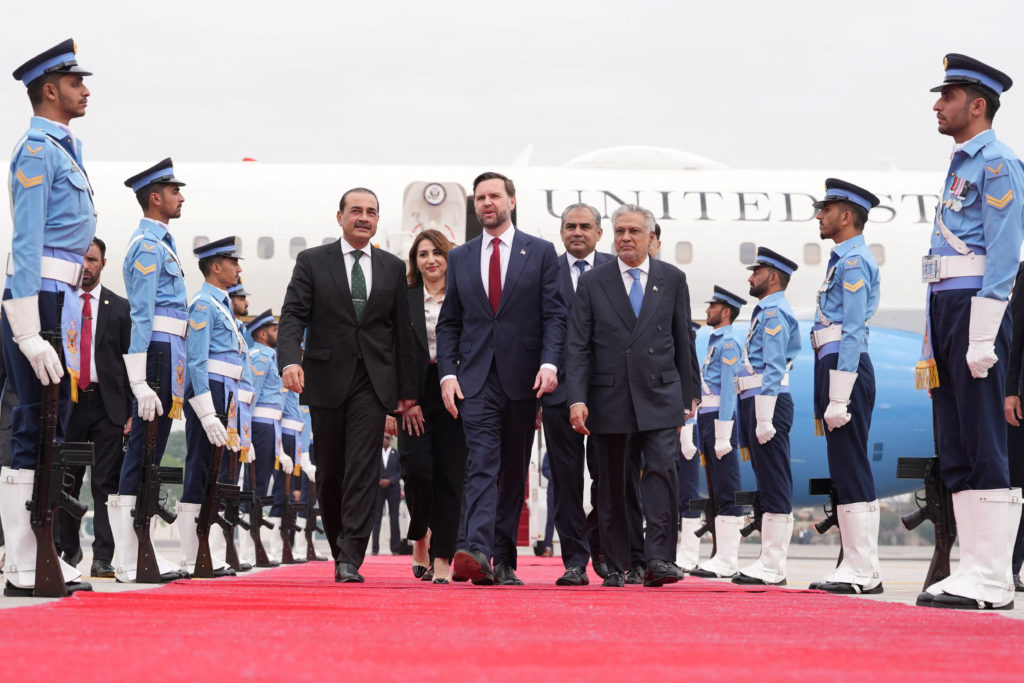
Then, on Tuesday, just hours before the deadline, Pakistani Prime Minister Shehbaz Sharif, a key mediator in the conflict, publicly called President Trump, urging more time for negotiations.
“Diplomatic efforts for peaceful settlement of the ongoing war in the Middle East are progressing steadily, strongly and powerfully with the potential to lead to substantive results in near future,” Sharif said, reported by ABC. “To allow diplomacy to run its course, I earnestly request President Trump to extend the deadline for two weeks.”
Shortly afterward, Trump posted on Truth Social that the attacks will be suspended for two weeks.
“I agree to suspend the bombing and attack of Iran for a period of two weeks. This will be a double sided CEASEFIRE,” he published, according to NBC News.
Iran’s Supreme National Security Council announced the country had agreed to the ceasefire and would use the two weeks provided to finalize a peace deal. Iran also claimed it would cease their own opposing attacks as long as the U.S. and Israeli strikes were halted as well.
On Wednesday, the Iranian government publicly released a 10-point proposal, which is a response to the Trump administration’s 15-point plan that was submitted to Tehran through Pakistani intermediaries. Iran’s plan includes the U.S. guaranteeing future nonaggression towards Iran, recognizing Iranian control over the Strait of Hormuz, ending hostilities throughout the region, withdrawing militarily from the Middle East and providing reparations to Iran. But during a press briefing at the White House later that day, press secretary Karoline Leavitt said that the plan wasn’t ideal for the President.
“It was literally thrown in the garbage by President Trump and his negotiating team,” Leavitt said, tells The Hill.
On the home front, polls suggest that many Americans disapprove of the conflict, as it has raised gas prices for the country, is affecting the stock market and hasn’t done much to prevent civilian casualties on both fronts. In a poll by the Pew Research Center, 69% of Americans are extremely or very concerned about higher gas and oil prices. The same percentage of Americans don’t believe the U.S. is doing enough to prevent civilian casualties in the military action against Iran. The ceasefire does shine some light on a potential peace deal but the end of the war is completely ambiguous.