

Rating: 2.5/5
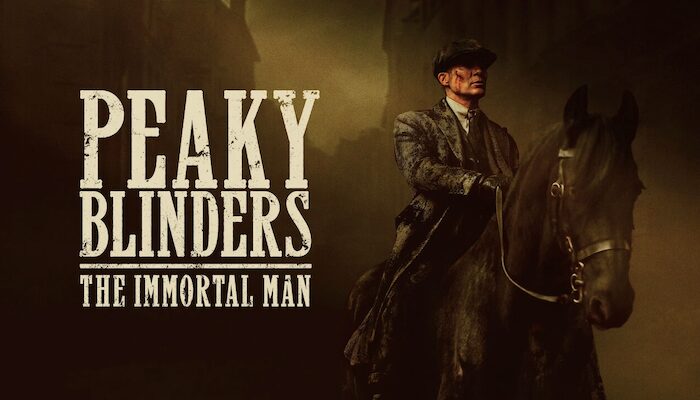
Directed by Tom Harper, ‘Peaky Blinders: The Immortal Man’ is the film sequel to the hit BBC/Netflix show ‘Peaky Blinders,’ and continues the journey of protagonist Tommy Shelby, played by Academy Award winner Cillian Murphy, who is brought back into the crime world from self-exile when his long lost son, Duke, played by Barry Keoghan, becomes entangled in a dangerous Nazi plot during the Second World War. If this is not known, ‘Peaky Blinders,’ lasting from 2014 to 2022, followed a notorious gang in 1919 Birmingham, England, of the same name, led by Great War veteran Tommy Shelby. The series became a huge success, garnering a large fanbase, awards for the cast, and now, a sequel. Recently, a sequel series has been announced to premiere sometime this year or next. Here are my thoughts.
Even with all of its flaws, the film does have a lot to offer. Firstly, the performances by the returning actors, Murphy and Sophie Rundle, who plays Ada Thorne, Tommy’s sister, stick out from the rest. They both embody their characters and bring everything they have to the table. Harper’s direction seems straightforward, and it works in the end. The soundtrack, which the show was notorious for, is still amazing in the film and the most memorable feature. The action sequences are also beautifully choreographed and visually stunning. Now, from this point on, as I discuss the film’s flaws, there will be spoilers. If you have not seen the film and would like to, do not read beyond this point.
The film’s major problem, in my opinion, was its writing. The writing is the main reason for all of these flaws. Steven Knight, the creator and primary writer of ‘Peaky Blinders,’ provided beautiful writing for the entire six seasons of the show. Yet, in the film, the writing goes downhill and becomes borderline lazy. The biggest writing inadequacy is the killing off of Tommy’s older brother, Arthur Shelby, who Paul Anderson played in the show. Due to personal issues, Anderson could not return to play Arthur. In the film, it is revealed that Arthur passed away, presumably from his own doing. Arthur was the main one who suffered from PTSD and drug abuse after the Great War and had attempted to take his life in the show. It is then revealed that Arthur didn’t take his own life; Tommy killed him. As Tommy told it, he and Arthur had gotten drunk, which resulted in Arthur crashing his car. As he tussled with his brother, Tommy intentionally strangled him to ‘be free of him.’ This specific writing decision makes no sense to me, as a die-hard ‘Peaky’ fan. Arthur and Tommy’s bond was the strongest out of all of his siblings, with Arthur being the most loyal to Tommy. To have Tommy kill his older and closest brother to write him off is incredibly lazy and almost angering. His death would’ve made much more sense if Arthur had taken his own life, not Tommy. This plot device is also thrown away once it is revealed by Tommy and isn’t brought up again until the end of the film.
Anderson’s character wasn’t the only one who fell victim to lazy writing. Rundle’s character of Ada was also killed off about an hour into the film. Her death, which was very violent and abrupt, came after Duke was tasked to kill her by the antagonist, John Beckett, played by Tim Roth, a British man working for the Nazis who had recruited Duke. Duke doesn’t end up pulling the trigger; Beckett does. Her death simply didn’t need to happen. It did give Tommy a bigger incentive to take down Beckett and his operation, but it was purely for shock factor and didn’t really add anything of value to the plot, besides a big hole where Ada had once been.
On the topic of the antagonist, the audience isn’t really given anything about Beckett. We just know that he’s British, works for the Nazis, and is carrying out an operation to infiltrate the British economy with counterfeit money with the help of Duke. We’re not given a backstory or any context into how he got into his position and why he is incredibly pivotal to the Nazi war effort. Roth gives a decent performance, but I just wasn’t connected to his character or his message. The insertion of Beckett didn’t make much sense either. At the end of the show, Tommy had many enemies coming after him: fascist leader Oswald Mosley, gang leader and drug dealer Jack Nelson, and his forces in Boston, etc. Mosley’s absence made sense; the real-life figure was imprisoned during the time that the film takes place. The replacement of him with the flat and non-interesting Beckett didn’t help the story. His death at the end of the film was predictable and didn’t leave an impression on me.
The other two main characters, Duke and his aunt, Kaulo, played by Rebecca Ferguson, also didn’t leave me amazed. Duke was introduced in the final episodes of the show, and we don’t know much about him. A young Conrad Khan portrayed him in the show, but was replaced by Keoghan. I firmly believe that Keoghan shouldn’t have been cast, even if his age fit the time jump from the show to the film. Keoghan’s performance was almost laughable at times, as his Gypsy accent was all over the place. His performance was the worst of the film, in my opinion. The character of Kaulo is also oddly placed. She is the twin sister of Duke’s mother and uses her Gypsy magic to make herself look more like her sister to get with Tommy. That’s all she’s really used for besides conspiring with Duke to eventually kill Tommy. She was incredibly underwritten and uses her body to knock some sense into Tommy to help Duke. Ferguson gave a pretty good performance that was fairly memorable, but the writing just couldn’t save Kaulo.
The last gripe I have with the film’s writing is the circumstances of Tommy’s death. Again, like the situation with Arthur, it would’ve made more sense if Tommy had taken his own life rather than someone doing it for him. At the end of the film, Tommy makes Duke shoot him after he is already injured. While I’m not mad at Tommy’s death, I just think it wasn’t necessary, nor was it portrayed well. Tommy also suffered from PTSD and drug abuse, coming extremely close to taking his own life. To have his son, the one that he just met not long ago, be the one to kill him is just lazy. Duke is not Tommy’s only son. Tommy welcomed a son with his wife, Grace, in season three, named Charlie. Charlie had an incredibly troubled relationship with Tommy due to Tommy not being around much during Charlie’s childhood. It would’ve been a brilliant decision to make Charlie kill Tommy rather than a character that Tommy doesn’t even connect to.
Finally, Harper’s direction isn’t as good as it was during the first season, which he directed the last half of. With a run time of almost two hours, the film is fairly uneventful until the last act. The cinematography is a bit wacky, and the visuals, besides the action sequences, are very dull and unappealing. The film is more of an exposition piece rather than a continuation of the series. Regarding the sequel series, I also don’t believe that is needed. The way that ‘Peaky Blinders’ ended was the perfect way to close that chapter in the timeline. A film has already been made; why make another show? I personally wouldn’t recommend this film if anyone is a fan of the show, but I will be on the lookout for the sequel series to see what it has to offer.